
Houille !
A la suite de sa récente exposition au musée de l’Abbaye de Sainte-Croix aux Sables d’Olonne et la publication d’un nouveau livre, Killoffer présente, à la galerie anne barrault, une série de dessins sur papier et sur toile, réalisés en 2011 et 2012.
Il a souhaité à cette occasion inviter Ruppert et Mulot, qui présenteront, pour la première fois, un film intitulé “le Sacre du Printemps”.
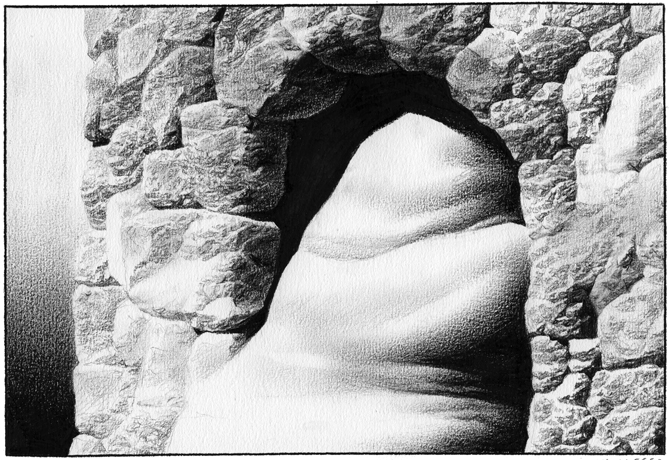
Killoffer a dressé des hypothèses sur l’origine commune de vos fonctions digestives et langagières et mis en évidence les convulsions épidermiques qui surgissent soudainement sous votre langueur bonhomme. Souvent, vos ralentissements hypnotiques, baroques et modern style provoquent des encombrements perceptifs qui rejoignent les empiétements lunaires de certaines rues parisiennes. Parfois, pris de vitesse, votre parcours engendre des jets de constellation sur la surface incliné de la feuille, des idées qui giclent comme du sperme intellectuel. Et c’est le commencement du monde, la naissance des planètes, les premiers peuples, l’animal archétype.
Il y a tant de Killoffer en vous et autour de vous. Pourquoi y a-t-il plusieurs Killoffer plutôt qu’un seul ? Parce que c’est tout votre sentiment de l’Univers qui est l’objet de son investigation simultanément disciplinée et dissipée. Et il est obligé de se diviser et de se dupliquer, de se faire alternativement métaphysicien expérimental, patabiologiste ou géomètre de science folle, pour attaquer votre perception par tous les fronts, ne pas lui laisser un instant de répit, la saisir dans son moment de métamorphose pure, dans son passage entre deux formes. Killoffer invoque alors tous ses multiples qui deviennent les adjuvants de son implacable enquête sur vous. Et si ses bandes dessinées sont métaphysiques et scatologiques, pleines d’interrogations incessantes comme des coulées de chiasse mentale, les images de Killoffer sont eschatologiques et cosmologiques, mollement minérales, alternant ombres et formations géologiques. Elles font apparaître les formes originelles de votre affectivité dans une équivocité native que ne résoudra nulle discrimination. Tout sera toujours ambigu dans votre vie. Tout sera toujours réversible, bistable, carnavalesque, douteux. C’est la victoire incontestable sur le monde du canard-lapin. Joseph Jastrow avait raison.
Le dessin de Killoffer commence par vous saisir au sortir du sommeil. C’est un sommeil éparpillé en formes rocheuses et plastiques, des plis que prend la pierre et des sculptures qui naissent au beau milieu des draps. Puis c’est une planète morcelée qui naît dans une aube brumeuse, vue au réveil, par un coin de fenêtre. Et c’est un gigantesque slip cosmique, que vous apercevez de l’autre côté du lit comme un spectre renversé. Ce sont des fantômes la gueule ouverte, hagards, affamés et assoiffés, qui se confondent avec les cagoules suspendues dans l’étalage de linge sale qui jouxte la douche que vous allez prendre pour votre mettre d’aplomb. Et ce sont des gants de toilette comme des bûches en plastiques qui apparaissent dans une salle de bain immaculée, prêt à bondir sur vous tels des animaux mutants cachés derrière un buisson.
Vous êtes alors dans le plus dangereux des cosmos imaginables. Vous vous avachissez sur votre sofa et des larves ou des cornes de gazelle traversent le dossier. Ce sont des baleines spectrales dans une mer de pierre, et des limaces de sperme qui avancent vers un trou comme des bébés baleines. Vous regardez par la fenêtre la nuit qui tombe sur votre nouveau jour. Et ce sont des planètes où coule une pluie torrentielle, comparable à des pis de vaches pissant du lait noir. Enfin, ce sont ces mêmes pis de vache fantômes qui s’assimilent aux saucisses suintant sur le grill de votre barbecue du lendemain, parce que toutes les formes sont folles, et qu’elles se retrouvent dans des mondes opposés, créant des analogies entre ce qui devrait rester séparé. Et partout c’est la moindre des cornes de rhinocéros de votre chair de poule qui hurle dans les douleurs de l’enfantement.
C’est quoi, dessiner, dans la logique inquiétante du cosmos Killoffer ? Dessiner, c’est retrouver l’équivocité, excrémentielle et symphonique, du commencement des choses. C’est créer un trait qui puisse dire plusieurs paroles en un seul mot, créer un être par dissociation produisant une déconnexion telle qu’elle dévorera l’univers connu par débordement d’affects. Dessiner, c’est accélérer la fin de ce cycle de manifestation et poser les bases, cosmogoniques, anarchiques et alchimiques, du suivant. Dessiner, ce serait naître, mais naître vraiment. Jusque là, vous étiez dans la nuit et nous parlions de la destruction universelle.
Pacôme Thiellement
Ce texte est publié dans le dernier livre de Killoffer “Charbons”, éditions L’Association
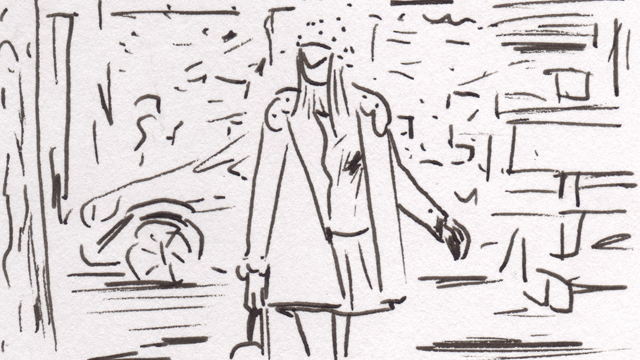
Florent Ruppert et Jérôme Mulot sont nés respectivement en 1979 et 1981, ils se sont rencontrés lors d’un barbecue à l’Ecole des Beaux Art de Dijon en 1999. Leur production de bande dessinée où les deux amis participent aussi bien au dessin qu’au scénario s’applique a dépeindre des situations absurdes a la fois drôle et curieuses.
Des photographes s’interrogent sur l’origine des cicatrises aux visages d’un champion de boomerang dépressif, des esclaves noirs se vengent de leur maitre en tapotant la veste de ces derniers avec leur pénis, des ennemis se battent en duel au milieu d’une réunion annuelle d’avaleur de sabre…
Killoffer présente Ruppert et Mulot à la maison d’édition l’Association en 2005 et leur second livre Panier de singe est primé au festival d’Angoulême en 2007.
En 2008 les deux auteurs commencent a développer en parallèle de leur production chez leur éditeur une nouvelle forme de bande dessinée qu’ils font sortir de son champ habituel : le livre. La narration est appliquée à des expositions de dessins, des installations, des conférences, des sculptures animées ou est raconté par exemple le déroulement d’une audition de théâtre ou des acteurs affublés de masques doivent jouer l’ébriété a l’occasion d’un spectacle pour les alcooliques anonymes suisses…